Eosinophilic Gastrointestinal Diseases (EGIDs)
Pathology: Food allergens are a common trigger for gastrointestinal lining inflammation.
Food-Symptom Interval: The inflammation is delayed, so the connection between a food allergen and symptoms is not apparent.
Diagnosis: The disease is diagnosed with a gastrointestinal biopsy showing increased eosinophils in the lining. Food triggers are determined through an elimination diet and food challenge.
Treatment: The inflammation is treated with food restriction and/or anti-inflammatory medications.
EGIDs are characterized by inflammation of the gastrointestinal lining and infiltration with eosinophils (white blood cells). The lumen narrows and becomes more rigid.
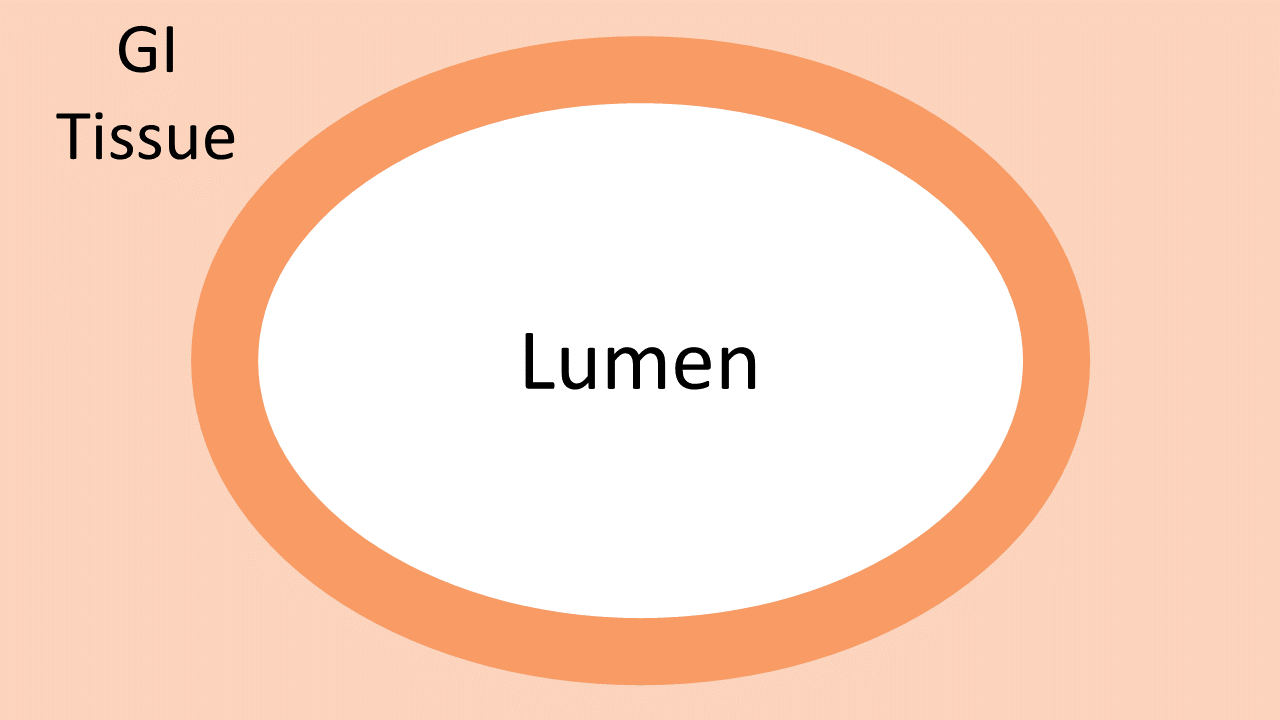
Food allergens are the most common triggers, as evidenced by remission with elimination diets and elemental (amino acid) formulas. As discussed in the food protein lesson (Module #2: Physiology Overview), individual amino acids are non-allergenic because there is no epitope.
Symptoms depend on the severity of inflammation and the region that is affected.

The diagnosis is based on a biopsy showing elevated eosinophils in the gastrointestinal lining.
Traditionally, EGIDs have been managed with anti-inflammatory medications, such as steroids. However, in the last decade, the role of food allergens has been recognized, and elimination diets or elemental formulas have become standard therapy. Most EGID patients are atopic (i.e., a genetic tendency to produce IgE antibodies) and are sensitized to several food allergens. However, food-specific IgE blood and skin tests are unreliable indicators of problematic foods. Some patients have concomitant IgE-mediated food allergy and EGID triggered by different foods. For example, peanuts may trigger anaphylaxis, but milk and egg trigger eosinophilic inflammation.
The most common protocol is the six-food elimination diet, which usually restricts milk, soy, egg, wheat, peanuts/tree nuts, fish/shellfish. However, the specific foods vary between experts. Once the allergenic food triggers are restricted, the inflammation subsides in approximately four to six weeks. The eliminated foods are then systematically reintroduced to pinpoint triggers.
Studies have shown high remission rates with elemental formulas. However, elemental formulas are expensive, unpalatable, and only used in severe cases.
EGID symptoms wax and wane, and food hypersensitivities change over time.
I organized a one-week food allergy camp each summer for ten years. Most children returned every year. The two children with EGIDs had slightly different diet requirements each summer, depending on other factors in their life or disease state.