FODMAP Intolerance
Pathology: Carbohydrates not digested or absorbed in the small intestine undergo bacterial fermentation in the large intestine.
Food-Symptom Interval: The symptoms (diarrhea, gas, bloating) typically start about 4 – 6 hours after eating.
Diagnosis: Currently, there are no accepted diagnostic laboratory tests. The self-diagnosis is based on symptom improvement with short-term elimination. If symptoms improve, FODMAP groups are reintroduced to pinpoint the most problematic. Support from a specialized dietitian is essential.
Treatment: Treatment includes maximizing digestive health, diet restriction and enzyme supplements (in some cases).
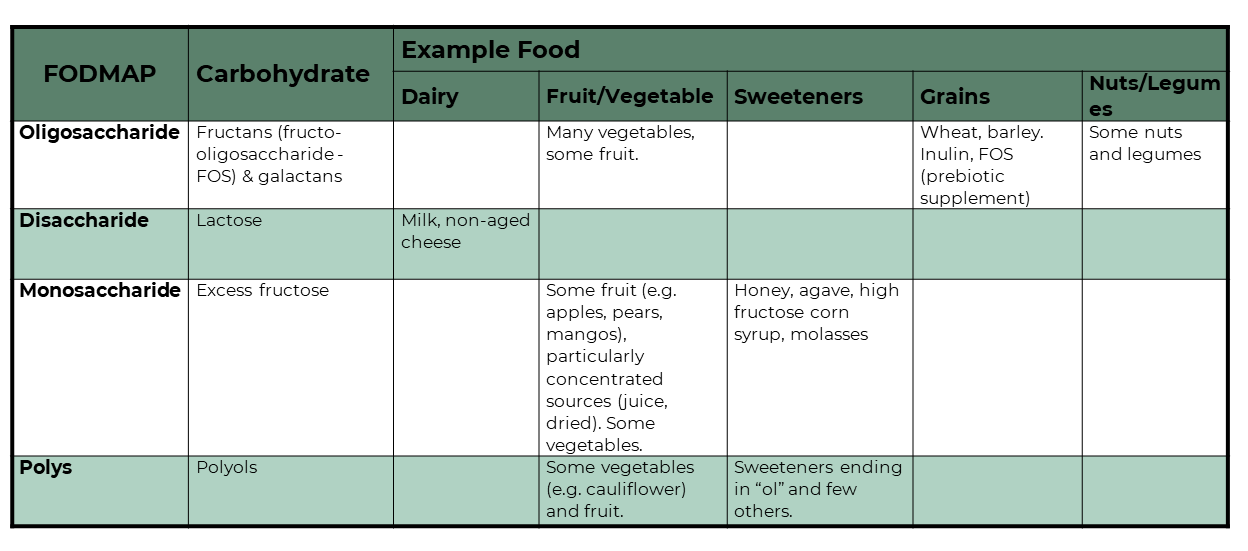
FODMAP is an abbreviation for Fermentable, Oligosaccharides, Disaccharides, Monosaccharides and Polys. The table provides a brief overview of the various FODMAP groups.
The symptoms are similar to lactose intolerance as described previously.
The low FODMAP diet has been developed as a trial elimination (approximately 4 – 6 weeks). If the client feels better, each FODMAP group is reintroduced systematically. This process helps the client understand how their body responds to different carbohydrates. It is not always crystal clear. By the end, the client will hopefully eat their usual diet and only restrict a few truly problematic foods (if necessary).
Unfortunately, the low FODMAP diet is often recommended without further direction or registered dietitian referral. As a result, individuals may stay in the restricted phase for the long term.
Enzyme supplements may help clients affected by FODMAP carbohydrates, such as
No consensus guidelines suggest which supplements are best for certain symptoms. It takes experimentation. If clients are interested, they should be encouraged to experiment systematically (Module #10). The client should be able to judge the benefit of an enzyme supplement quickly (e.g. the supplement works on the next meal).